
(Click any image to enlarge it or save it.)
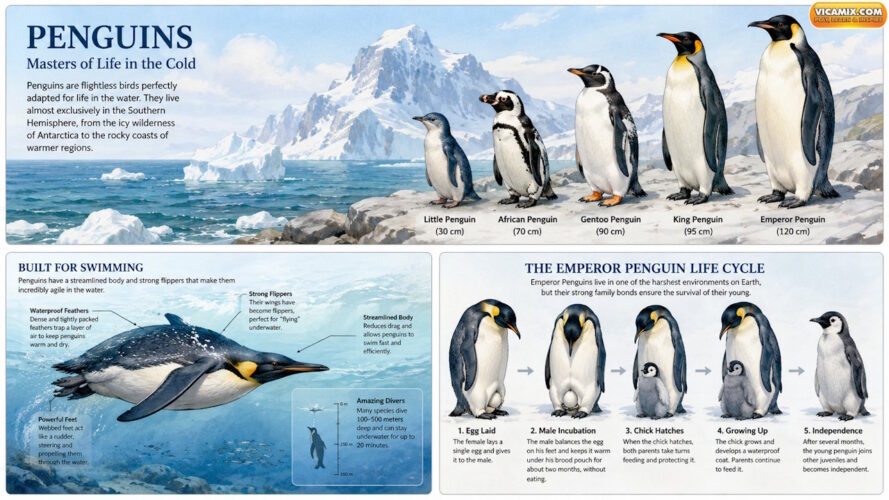
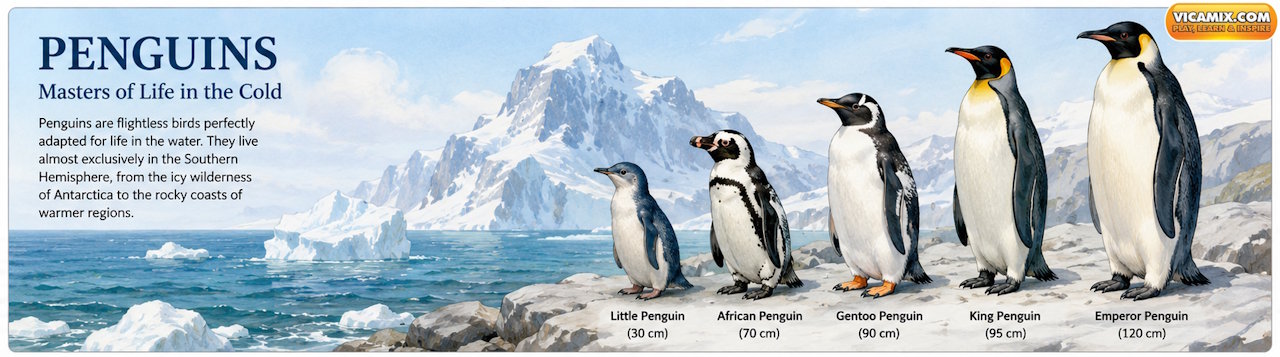
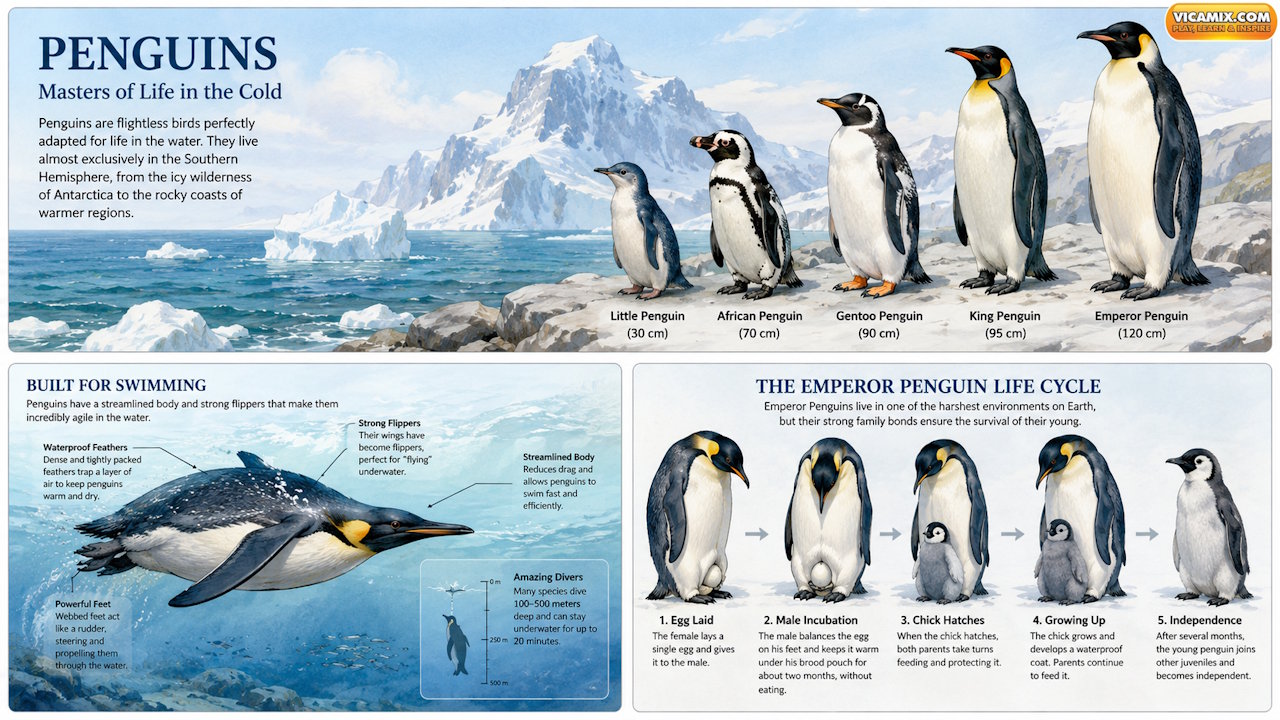
Penguins are among the most fascinating birds on Earth. Unlike most birds, they cannot fly, but they are exceptional swimmers perfectly adapted to life in the water. Found almost exclusively in the Southern Hemisphere, penguins have captured the imagination of people around the world with their unique appearance, remarkable behavior, and incredible survival skills.There are 18 recognized species of penguins, ranging from the tiny Little Penguin, which stands only about 30 centimeters (12 inches) tall, to the impressive Emperor Penguin, the largest species, reaching more than 1 meter (3.3 feet) tall. Although many people associate penguins with Antarctica, several species actually live in much warmer climates, including the coasts of South Africa, Australia, New Zealand, South America, and even the Galápagos Islands near the equator.
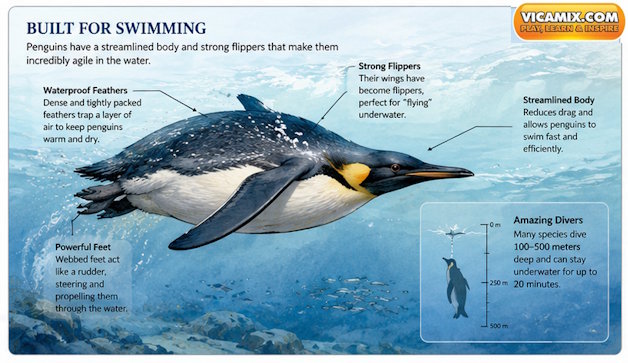
Penguins are built for swimming rather than flying. Their wings have evolved into strong, flat flippers that allow them to “fly” through the water with incredible speed and agility. Depending on the species, penguins can swim at speeds of up to 15 kilometers (9 miles) per hour and dive hundreds of meters below the surface in search of fish, squid, and krill. Their streamlined bodies and dense waterproof feathers help them stay warm even in freezing waters.
One of the most remarkable aspects of penguin life is their social behavior. Many species live in large colonies that can contain thousands or even millions of individuals. These colonies provide protection against predators and make it easier to find mates. During the breeding season, penguins perform elaborate courtship displays involving calls, bowing, and offering small stones as gifts to potential partners.
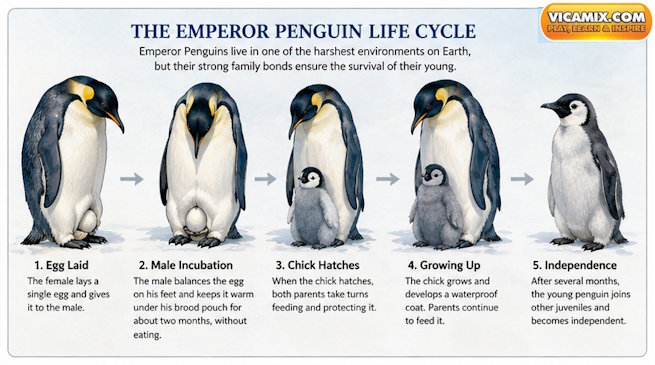
The Emperor Penguin is especially famous for its extraordinary parenting. After the female lays a single egg, she transfers it to the male, who carefully balances it on his feet beneath a warm fold of skin called a brood pouch. While the female travels to the ocean to feed, the male remains on the Antarctic ice for about two months without eating, enduring temperatures that can drop below -40°C (-40°F) and fierce winds. Once the female returns, the parents take turns caring for and feeding their chick.
Penguins face several threats in today’s world. Climate change is reducing sea ice in some regions, affecting breeding grounds and food availability. Overfishing can reduce the supply of fish and krill, while pollution, oil spills, and plastic waste also pose significant dangers. Conservation organizations around the world work to protect penguin habitats, establish marine protected areas, and promote sustainable fishing practices.
Beyond their ecological importance, penguins have become beloved symbols of resilience, teamwork, and family. Their unique adaptations demonstrate the incredible diversity of life on Earth and remind us of the importance of protecting fragile ecosystems. By supporting conservation efforts and reducing our environmental impact, we can help ensure that future generations will continue to enjoy these remarkable birds in the wild.
FREE DESKTOP WALLPAPER
Click the image to enlarge it and save it.
LEARN MORE
Penguins on Wikipedia…
Image Gallery…
Videos:
Related keywords: Antarctic wildlife, Emperor Penguin, flightless birds, marine birds, penguin conservation, penguin facts, penguin habitat, penguin life cycle, penguin species, Southern Hemisphere animals








Add comment